Al-Khowârizmi (aka Mahomet ibn Moses) was a Persian who worked as a mathematician, astronomer and geographer early in the Golden Age of Islamic science. He introduced the Hindu decimal system to the Islamic world and Europe,invented the horary quadrant,improved the sundial,developed trigonometry tables and improved on Ptolemy's astronomy and geography. He wrote the book Al-Jabr, which demonstrated simple algebra and geometry, and several other influential books. Unlike Diophantus' work, which dealt in specific examples, Al-Khowârizmi presented general methods. The word algorithm is borrowed from Al-Khowârizmi's name. There were several Muslim mathematicians who contributed to the development of Islamic science, and indirectly to Europe's later Renaissance, but Al-Khowârizmi was one of the earliest and most influential.
By:Amiza binti Ahmad Murad
Sunday, 11 March 2012

famous mathematician
Isaac Newton and Wilhelm Leibniz

I have placed these two together as they are both often given the honor of being the ‘inventor’ of modern infinitesimal calculus, and as such have both made monolithic contributions to the field. To start, Leibniz is often given the credit for introducing modern standard notation, notably the integral sign. He made large contributions to the field of Topology. Whereas all round genius Isaac Newton has, because of the grand scientific epic Principia, generally become the primary man hailed by most to be the actual inventor of calculus. Nonetheless, what can be said is that both men made considerable vast contributions in their own manner.
THE HISTORY OF NUMBER ZERO (0)
0 is both a number[1] and the numerical digit used to represent that number in numerals. It fulfills a central role in mathematics as the additive identity of the integers, real numbers, and many other algebraic structures. As a digit, 0 is used as a placeholder in place value systems. In the English language, 0 may be called zero, nought or (US) naught, nil, or "o". Informal or slang terms for zero include zilch and zip.[2]Ought or aught have also been used historically.
The word "zero" came via French zéro from Venetian zero, which (together with cipher) came via Italian zefiro from Arabic صفر, ṣafira = "it was empty", ṣifr = "zero", "nothing". This was a translation of the Sanskrit word shoonya (śūnya), meaning "empty"
Another zero was used in tables alongside Roman numerals by 525 (first known use by Dionysius Exiguus), but as a word, nulla meaning "nothing", not as a symbol. When division produced zero as a remainder, nihil, also meaning "nothing", was used. These medieval zeros were used by all future medieval computists (calculators of Easter). The initial "N" was used as a zero symbol in a table of Roman numerals byBede or his colleague around 725.
In 498 AD, Indian mathematician and astronomer Aryabhata stated that "Sthanam sthanam dasa gunam" or place to place in ten times in value, which is the origin of the modern decimal-based place value notation.[19]
The oldest known text to use a decimal place-value system, including a zero, is the Jain text from India entitled the Lokavibhâga, dated 458 AD. This text uses Sanskrit numeral words for the digits, with words for zero such as the Sanskrit word for "void" or "empty", shunya.[20] The first known use of special glyphs for the decimal digits that includes the indubitable appearance of a symbol for the digit zero, a small circle, appears on a stone inscription found at the Chaturbhuja Temple at Gwalior in India, dated 876 AD.[21][22] There are many documents on copper plates, with the same small oin them, dated back as far as the sixth century AD, but their authenticity may be doubted.[8]
The Hindu-Arabic numerals and the positional number system were introduced around 500 AD, and in 825 AD, it was introduced by a Persian scientist, al-Khwārizmī,[23] in his book on arithmetic. This book synthesized Greek and Hindu knowledge and also contained his own fundamental contribution to mathematics and science including an explanation of the use of zero.
It was only centuries later, in the 12th century, that the Arabic numeral system was introduced to the Western world through Latin translations of his Arithmetic.
0 is the integer immediately preceding 1. In most cultures, 0 was identified before the idea of negative things (quantities) that go lower than zero was accepted. Zero is an even number,[24] because it is divisible by 2. 0 is neither positive nor negative. By most definitions[25] 0 is a natural number, and then the only natural number not to be positive. Zero is a number which quantifies a count or an amount of null size.
The value, or number, zero is not the same as the digit zero, used in numeral systems using positional notation. Successive positions of digits have higher weights, so inside a numeral the digit zero is used to skip a position and give appropriate weights to the preceding and following digits. A zero digit is not always necessary in a positional number system, for example, in the number 02. In some instances, a leading zero may be used to distinguish a number.
Source:http://en.wikipedia.org/wiki/0_(number)
Source:http://en.wikipedia.org/wiki/0_(number)
maths riddles! :D
Riddle 1)
How can you add eight 8's to get the number 1,000? (only use addition)
2) Two Fathers and Two Sons Riddle
Two fathers and two sons sat down to eat eggs for breakfast. They ate exactly three eggs, each person had an egg. The riddle is for you to explain how
3) Three Guys at A Hotel Riddle
Three guys rent a hotel room for the night. When they get to the hotel they pay the $30 fee, then go up to their room. Soon the bellhop brings up their bags and gives the lawyers back $5 because the hotel was having a special discount that weekend. So the three lawyers decide to each keep one of the $5 dollars and to give the bellhop a $2 tip. However, when they sat down to tally up their expenses for the weekend the could not explain the following details:Each one of them had originally paid $10 (towards the initial $30), then each got back $1 which meant that they each paid $9. Then they gave the bellhop a $2 tip. HOWEVER, 3 • $9 + $2 = $29The guys couldn't figure out what happened to the other dollar. After all, the three paid out $30 but could only account for $29.
Can you determine what happened?
answers!
1.The key to this math riddle is realizing that the one place must be zero.
888 +88 +8 +8 +8 =1,000
888 +88 +8 +8 +8 =1,000
2.one of the 'fathers' is also a grandfather. Therefore the other father is both a son and a father to the grandson.
In other words, the one father is both a son and a father.3.There are many ways of explaining/thinking about this truly brain bending riddle! It all boils down to the fact that the lawyers's math is incorrect. They did NOT spend $9 • 3 + $2.
They spent exactly $27 dollars. $25 for the room and $2 for the tip. Remember they got exactly $3, in total back.
Another way to think about the answer to this riddle is to just pretend that the bellhop refunded $3 to the lawyers (rather than giving them $5 and receiving $2 back). If the lawyers get $3 back and each takes $1. They they spent exactly $27 dollars.
source: http://www.mathwarehouse.com/riddles/math-riddles.php
Job Oppurtunaties
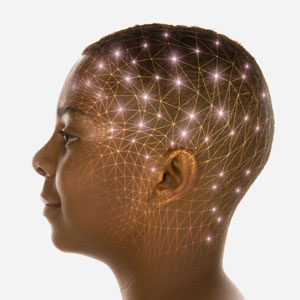
Opportunities for mathematicians
Between one third and one half of all jobs requiring graduates are open to students of any discipline. Of course, mathematicians are eligible for these jobs. In addition, there are careers for which a degree in mathematics is either essential or a strong advantage. These fall into a number of general areas:Scientific research, design and development
-
Large companies and government research establishments are actively
involved in research and development. They employ mathematicians and
statisticians, usually along with other scientists in interdisciplinary
research teams. The problems being solved require a flexible approach
and speedy solutions, the need being for ``best possible'' answers
in the time available. Projects of this type require high
mathematical skill, ability to analyse complex problems in order to
formulate them mathematically and to use computers in their solution
(a skill developed during mathematics degree courses), willingness to work to
deadlines, and ability to communicate findings to others.
The range of problems on which mathematicians are engaged is wide. We give a few examples. In the aircraft industry, there is work on aerodynamical design, providing theoretical results which predict or complement those from (for example) experimental wind tunnels. In pollution control, mathematicians would develop ``models'' (mathematical equations) predicting dispersal rates of chimney effluents under different meteorological conditions. In telecommunications, mathematicians may work on improved communications links, computer-recognition of handwriting and speech patterns, and distortion in digital transmission.
-
Management services and computing
The problems of coping with rapid changes in technology and market conditions in large and complex organisations make it essential for managers to call on specialist services. Management service specialists define and investigate problems systematically. The work is often mathematical, involving an area of mathematics known as Operational Research. It might involve designing a more efficient transportation programme for deliveries to a supermarket chain, or a stock control pattern for a car franchise holder. Computing is a major part of the work of most management services departments. Entrants are usually appointed as trainee programmers, but the work can be very varied, especially for employees of a company of management consultants. Their role is to set up mathematical models of the situations they are required to analyse, and to use computers in the solution of the problems, rather than just to write computer programs.
Personal qualities are especially important - tact, understanding, ability to communicate - because in recommending action based on their work, mathematicians can face resistance to changing familiar methods and practices.
-
Financial work
In recent years, up to half of all mathematics graduates have taken up a career in finance.
-
Accountancy
Firms of chartered accountants - the main employers - do not normally specify degree disciplines of entrants. They are particularly keen though to recruit mathematics graduates, because of their numeracy skills and logical thought, and because they are normally very successful in the professional examinations (on average, more so than accountancy graduates!). So to become an accountant, you do not need to take a degree in accountancy. A mathematics degree allows many openings in accountancy, should you wish to follow them after graduation, as well as all the other opportunities. -
Actuarial work
This has long been a popular field for mathematics graduates. The work involves the application of probability and statistics to financial affairs such as life assurance, pensions and social security, so a degree involving a substantial proportion of these subjects is desirable. Traineeships occur with life assurance companies and insurance companies as well as with actuarial consultants. Career and salary prospects for those with managerial and commercial potential are excellent. -
Other openings in finance
There are some opportunities in banking, particularly with the head offices of major banks, or with merchant banks. Mathematicians have frequently been successful candidates for the Tax Inspectorate.
-
Accountancy
-
Statistical work
We have already discussed one aspect of work undertaken by statisticians - the work of an actuary. In addition, statistical work is carried out in many organisations - the Civil Service (economics and agriculture in particular), research establishments, large industrial firms and commercial concerns (e.g. market research agencies). The work is varied, depending on the activities of the employer. In the Civil Service and in research establishments (government and industrial), statisticians work on design and analysis of experimental projects. In industry, the work may involve quality control, where statisticians collaborate in designing procedures for testing and in assessing the results of the tests. Statisticians employed by market research and advertising agencies will be involved in survey design and evaluating responses.
So, dear friends and dedali lovelies, studying mathematics offers us a variety of job opportunities! Therefore, take a chance and realize how mathematics can change your life ;) Good Luck! <3
By Rashmika and Jannani
maths is important! ;)
When you buy a car, follow a recipe, or decorate your home, you're using math principles. People have been using these same principles for thousands of years, across countries and continents. Whether you're sailing a boat off the coast of Japan or building a house in Peru, you're using math to get things done.

How can math be so universal? First, human beings didn't invent math concepts; we discovered them. Also, the language of math is numbers, not English or German or Russian. If we are well versed in this language of numbers, it can help us make important decisions and perform everyday tasks. Math can help us to shop wisely, buy the right insurance, remodel a home within a budget, understand population growth, or even bet on the horse with the best chance of winning the race.
Quotes about Mathematics1. “Education should be started with mathematics. For it forms welldesigned brains that are able to reason right. It is even admitted thatthose who have studied mathematics during their childhood should betrusted, for they have acquired solid bases for arguing which becometo them a sort of second nature”.Ibn Khaldun, al-Muqaddima (born in 1332, Tunis), historian, sociologist, philosopherStrongest personalities of Arab-Muslim culture in the period of its deline.
Friday, 9 March 2012
Most known Mathematicians ~
FIBONACCI

Also referred to as Leonard of Pisa, Fibonacci was an Itallian number theorist. It is believed that Leonardo Pisano Fibonacci was born in the 13th century, in 1170 (approximately) and that he died in 1250. Fibonacci was born in Italy but obtained his education in North Africa. Very little is known about him or his family and there are no photographs or drawings of him. Much of the information about Fibonacci has been gathered by his autobiographical notes which he included in his books.
However, Fibonacci is considered to be one of the most talented mathematicians for the Middle Ages. Few people realize that it was Fibonacci that gave us our decimal number system (Hindu-Arabic numbering system) which replaced the Roman Numeral system. When he was studying mathematics, he used the Hindu-Arabic (0-9) symbols instead of Roman symbols which didn't have 0's and lacked place value. In fact, when using the Roman Numeral system, an abacus was usually required. There is no doubt that Fibonacci saw the superiority of using Hindu-Arabic system over the Roman Numerals. He shows how to use our current numbering system in his book Liber abaci .
Also referred to as Leonard of Pisa, Fibonacci was an Itallian number theorist. It is believed that Leonardo Pisano Fibonacci was born in the 13th century, in 1170 (approximately) and that he died in 1250. Fibonacci was born in Italy but obtained his education in North Africa. Very little is known about him or his family and there are no photographs or drawings of him. Much of the information about Fibonacci has been gathered by his autobiographical notes which he included in his books.
However, Fibonacci is considered to be one of the most talented mathematicians for the Middle Ages. Few people realize that it was Fibonacci that gave us our decimal number system (Hindu-Arabic numbering system) which replaced the Roman Numeral system. When he was studying mathematics, he used the Hindu-Arabic (0-9) symbols instead of Roman symbols which didn't have 0's and lacked place value. In fact, when using the Roman Numeral system, an abacus was usually required. There is no doubt that Fibonacci saw the superiority of using Hindu-Arabic system over the Roman Numerals. He shows how to use our current numbering system in his book Liber abaci .
The following problem was written in his book called Liber abaci:
A certain man put a pair of rabbits in a place surrounded on all sides by a wall. How many pairs of rabbits can be produced from that pair in a year if it is supposed that every month each pair begets a new pair, which from the second month on becomes productive?
It was this problem that led Fibonacci to the introduction of the Fibonacci Numbers and the Fibonacci Sequence which is what he remains famous for to this day. The sequence is 1, 1, 2, 3, 5, 8, 13, 21, 34, 55... This sequence, shows that each number is the sum of the two preceding numbers. It is a sequence that is seen and used in many different areas of mathematics and science. The sequence is an example of a recursive sequence. The Fibonacci Sequence defines the curvature of naturally occurring spirals, such as snail shells and even the pattern of seeds in flowering plants. The Fibonacci sequence was actually given the name by a French mathematician Edouard Lucas in the 1870's.
Subscribe to:
Posts (Atom)